Tuesday, 1 October 2013

Going for a Walk


Going for a walk

In addition to giving people Reiki treatments we are told that Hawayo Takata, the woman who brought Reiki from Japan to the West, would also give health advice to help people in their healing.  One of the suggestions she made was that people should walk for 30 minutes each day.

This is of course now also advice we are given by doctors and other health professionals.  It’s also something a lot of people struggle to do. 
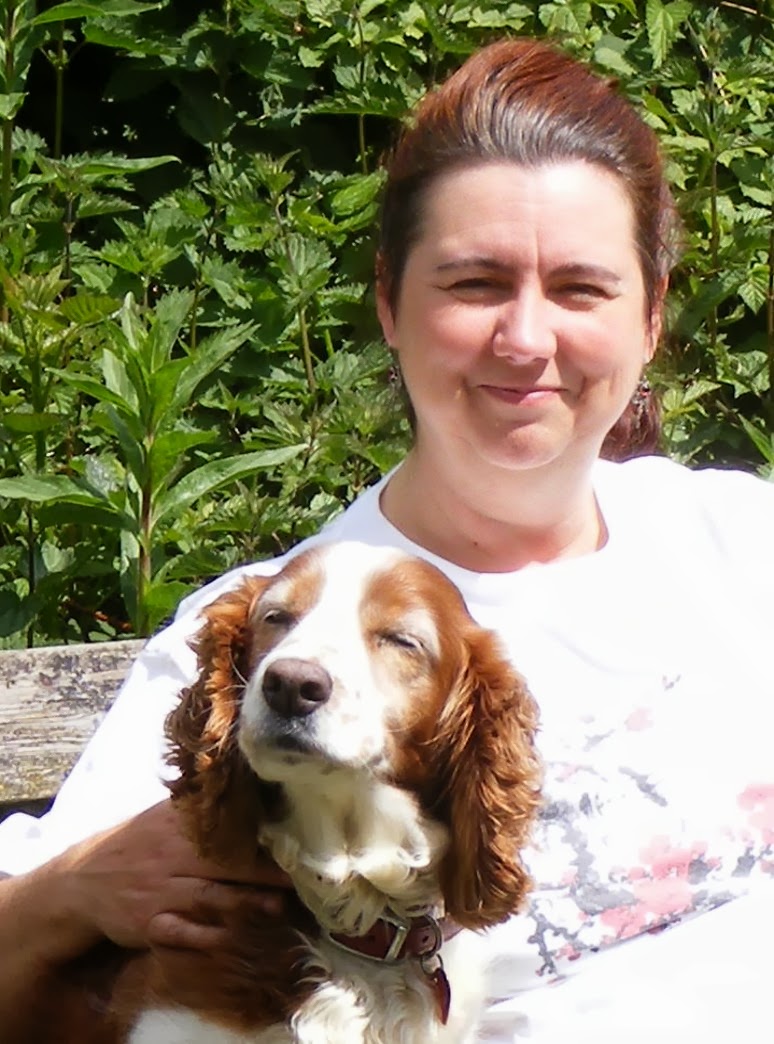
A few months ago we took on a new dog.  After the death of my old dog last summer I didn’t enjoy going for a walk on my own and even before she died it was a struggle as she wanted to go out less and I was very busy.  When I decided to have another dog I made a commitment to taking her for daily walks and this has been wonderful.  I have really enjoyed getting away from my desk for a while to re-connect with Nature and have some exercise.

One of the things I like about Takata’s advice is that, like Reiki, it’s simple.  All you have to do is go out, put one foot in front of the other and keep doing that for a while.  I find that this simple practice helps my mind as well as my body.  It helps increase my fitness but also allows me to unwind mentally.

I enjoy looking at the plants, birds and animals around me, the scents of the changing seasons and feel of different weather on my skin.  Recently there’s been lots of sunshine of course which has been wonderful – and great for topping up the vitamin D in preparation for the winter!

I enjoy watching the fun my dog has running around too and this lifts my heart if I’m having a troublesome day.  I also find that walking is a good way to solve a problem.  I read recently that the word ‘problem’ comes from the Greek meaning “the rocks put in our way by the gods”.  Sitting at my desk doesn’t help get round those rocks, but going for a walk often does!  As I walk and my mind relaxes, a solution often appears in a most unexpected way.  I also find Reiki treatments have a similar effect in that they also relax my mind and allow creative solutions to come forth.

Like Reiki, and as Mrs Takata suggested, it’s also good as a daily practice.  I’ve noticed that the more I practice daily the things that help me keep healthy, the less out of balance I get, so it’s easier and quicker for equilibrium to be restored.  Like Reiki, walking encourages flow both physically and mentally, enhances living in the present moment and enlivens the senses. 

So I’m grateful for the gift brought by my dog who encourages me to go walking each day and the joy that brings.  Yesterday I discovered harebells growing in a lane where I never would have expected them.  Bliss!

Sunday, 1 September 2013

What Diet Is Good For You?

Best diet for you

Chatting over lunch with some Reiki students recently the subject of dietary needs came up.  Various ideas about what people should and shouldn’t eat were discussed.  What struck me thinking about this discussion, and my own exploration of what diet makes me most healthy, is that advice can often be conflicting.

For example: for a woman of my age (menopausal) there is advice that soya can be helpful and the example of women in Japan who rarely suffer from hot flushes is given.  Then another expert advises that everyone should stay away from soya as it can be antagonistic to the human body.  So do I eat soya or not?

There are abundant theories about what diet can help us reach our ‘ideal’ weight.  What people find is that they don’t always work.  Our discussion over lunch included the ‘Blood Type Diet’ which some find works while others say it doesn’t.  What I think the blood type diet does offer is an insight into the fact that what works for one person is not necessarily good for another.

First Step


 Over the years I’ve made various changes to my diet and as a result feel more healthy and balanced.  I also find that I have a greater resilience, bouncing back more quickly from any infection or stressful time.  Most of the insights about what I needed to change came during my Reiki self treatments.  Often they began as vague intuition, frequently met by resistance due to the comforting nature of what I was feeling needed to be given up.  Reiki seems to help this resistance, because after a while of holding awareness of the need for change, one day it was an easy decision to take the first step.

What I have also learned is that we are all unique.   What nourishes us can depend not only on the genes we were born with, but also on how we were nourished in our early years of development.  It’s also common knowledge that what we like to eat has an emotional aspect to it for many people.

Comfort Eating


For example when I decided I needed to stop eating wheat I found it challenging to stop eating scones, because a trip out to a lovely place with a tea of scones with jam and cream was always a happy time in my childhood.  The food therefore became associated with this happiness, so to decide to give it up felt like giving up some happiness!  What's also true is that being stressed about what to eat is not good for our health.

Where I feel Reiki really helps is that it meets the needs of each individual, embracing our uniqueness and helping us to do the same.  With Reiki treatments comes deeper connection with the intuition and inner wisdom that will guide each of us to our particular dietary recipe that will bring vitality and good health.  It also helps to resolve the emotional attachments that make some dietary changes so difficult.

Let Reiki Help


So next time you are struggling to resolve conflicting advice about what you should or shouldn’t eat – let Reiki help you.  If you have learned Reiki: give yourself a treatment, holding your dilemma in mind – or if you have second degree Reiki you could use those tools to bring clarity.  If you have not learned Reiki or feel you need another person to support you, then seek out a Reiki practitioner and receive healing with this focus in mind.

However you approach your dietary changes may you celebrate your uniqueness and eat delicious food that gives you vitality and health.

Thursday, 1 August 2013

Silence and Stillness


One of the common questions in my Reiki classes is “Do you play music during Reiki treatments?”  While this may be common practice in some body therapies, generally I don’t: I offer Reiki in silence.  I also request that at the Reiki Shares we treat each other in silence, rather than chat (we do chat before and after the treatments!).

In today’s world many of us are bombarded with sounds of different kinds – music, spoken voice, machinery, electronics.  There are natural sounds as well such as birds, wind and rain,
but these are often drowned out by human-created noise.  There’s also the hubbub inside our heads of constant thoughts, irritations and worries.

When people receive Reiki healing it is an opportunity to spend a space of time in stillness and silence, away from the normal noise of life.  I feel this is a valuable and important aspect of Reiki, so do not want to interfere with it by adding music.

Music itself relies on silence – all music comes from silence: that moment of hushed expectation that precedes the first notes, the intake of breath before the song.  It’s the spaces between the notes that create the melody and rhythm.

Many people receiving Reiki have spoken to me about how their mind seems to slow down, how their thoughts become more peaceful and even that the mind becomes still.  For many, receiving Reiki is very similar to meditation – with less effort because all you have to do is lie down and the Reiki practitioner does the work!  Or in the case of learning Reiki the effort of making your connection with the healing energy is carried out for you by the Reiki master: all you have to do is sit in silent stillness.

In silence it becomes easier to notice what is really important in that moment, whether it’s a physical sensation in the body, a buried emotion or thought that needs to be acknowledged.  Often we are so busy we forget to notice what really matters: in the stillness and silence of a Reiki treatment we can re-connect with the simple joy of being alive.

In this restful silence of Reiki healing external noises are not disturbing.  This leads me to think that even if I did play music people wouldn’t really hear it, just as they don’t hear the talking next door or the sirens going by outside.

Silence and peace are valued in many spiritual traditions and the stillness of mind we experience in Reiki is the goal of many spiritual practices, such as yoga, meditation and prayer.  I feel especially at home teaching and practicing Reiki at the Quaker meeting house in Ludlow, because it’s a place where people sit in silence to connect with their spiritual selves.  As we sit in silence giving each other Reiki it feels very similar.

Offering Reiki treatment in silence is one way I enable people to achieve this peace of mind and feeling of connection, in a way that is simple and restful for them.  In such a busy, noisy world an hour of silence can be a true gift!

Tuesday, 2 July 2013

"Only service heals"


At a Reiki masters’ retreat with Phyllis Furumoto in April, she read an article “In the Service of Life” by Rachel Remen, a medical doctor who believes in “re-integrating the heart and soul into contemporary medicine”.  In this article she talks about the differences between fixing, helping and serving.  I found it inspiring and have been looking at my Reiki practice in this context.

In my early Reiki practice I realise I was a fixer: I wanted to be able to sort out people’s health problems.  I saw Reiki as a powerful tool to that could enable me to make people feel better.  When I started working publicly as a practitioner I was presented with a range of conditions that people wanted me to fix.  However, although people I treated received benefit from Reiki, it was rarely what needed ‘fixing’.  Rachel Ramen describes fixing as a form of judgement, because we see the person we are treating as ‘broken’ and in need of sorting out.  I began to realise that I could not fix people, that I could not make anything happen with Reiki.  

My practice then shifted more into being a helper, which Rachel Ramen describes as “using your own strength to help those of lesser strength”.  I can see that helping others with Reiki treatments made me feel stronger myself, that I gained satisfaction based on being able to use my Reiki strength to help.  However this was an un-equal relationship which ultimately could not be truly healing as it kept the person being treated in a place of weakness.

Through teaching Reiki I began to understand the quality of service.  I saw that although I performed the initiations and taught the hand positions, it was the students themselves who joined with this process, gave their commitment and enthusiasm, who were equal partners in the learning and that Reiki itself gave them the healing ability.   The more I taught, and the deeper my Reiki practice became, the stronger this understanding grew, so that now I see everything I do in teaching Reiki as calling forth different elements of service.

This has also changed how I feel about giving Reiki treatments.  When someone asks me for Reiki treatment for health problem they have, I hold the request from the point of view of service rather than fixing or helping.  I know I cannot fix their problem.  I may want to help, but I’m now aware that this creates an unequal relationship and that lasting healing will only happen when the person themselves is as engaged in the journey towards wholeness as I am – then, with the grace of Reiki, there is the potential for change. 

I now gain most satisfaction from treatments which are based on this mutual seeking for wholeness, rather than being a fixer or helper.  I no longer want to be in the place of judgement or inequality, even if it pleases my ego!  This only creates separation and through my Reiki teaching and practice I have come to value connection.  I have experienced the difference between the discomfort created by disconnection, compared to the joy that comes from connection.  I know that as I move deeper into my exploration of serving people on their path to the place of healing they seek, I will experience greater peace, fulfillment and balance in my life.

So I’m grateful to Phyllis for introducing me to this thought provoking article!

How may I serve you?

Sunday, 2 June 2013

Reiki for Burns

Mrs Takata who brought Reiki out of Japan
At a recent sharing group one of my Reiki students showed us a burn on her hand which she said was healing very well thanks to Reiki.  It had been quite a deep burn from touching the side of the oven.  We were also amazed to see that even by the end of the evening it looked less red and inflamed.  She told us there was little pain.

This reminded me of a deep burn I received from splashing hot oil on my hand.  It was the worst burn I’d experienced and was, of course, extremely painful.  After the initial first aid of cooling it under a tap I began to apply Reiki.  My husband brought me a bag of iced water and I put this on the burn and gave it Reiki through the bag.  It was very painful for about 10 minutes after which the pain subsided and became bearable.

As the damage to my skin was quite severe – it was an open wound larger than a 50p piece – I went to have it dressed by the nurse at my GP’s surgery the next day and.  She told me to come back if the wound wasn’t dry after a few days.  I had the impression she was expecting to see me again.

I continued to give the burn Reiki through the dressing as often as I could – sitting watching TV or in a meeting.  I was expecting there to be scarring or at the very least a dark mark on my skin.  After a few days I found that the wound was dry: no need to go back to the nurse.  In a short time my skin healed without scarring, not even a mark on the skin.  My own Reiki miracle!

I had read stories of Mrs Takata healing burns when she was practicing, which had inspired me to try it myself.  One of her experiences was quite dramatic: an electrician was asked to urgently repair a bread oven so that the baker could bake his bread for the day.  Perhaps due to the urgency, he forgot to check that the switch was turned off and, having crawled inside the oven, there was a flash and he caught fire.  The baker pulled him out and smothered the flames, but he was seriously burned.  Four of his family were Reiki trained and went to treat him immediately.  They treated him all over his body except for one small area that was less burned.   He had no pain and was soon allowed to go home from hospital, where he continued to receive daily Reiki treatments.  He had no scars except for the one spot they had left untreated.  After that experience he wanted to learn Reiki for himself!

I would be really interest in introducing Reiki to the specialist burns hospital in Birmingham, to do a trial to see whether Reiki could make a difference to the patients’ recovery.  I would love to teach the nurses or perhaps Reiki practitioners could be trained to work in this special environment.  Wouldn’t it be great If Reiki could help to improve the quality of life of burns survivors by reducing their pain and scarring? 

Wednesday, 1 May 2013

When conditions are right, change happens fast.


After all the months of cold, snow and ice Spring finally seems to have arrived and the change seems sudden.  The air is filled with birdsong, green shoots appear and the daffodils that should have flowered in March are able to blossom at last.
When April began and was still so cold I doubted the swallows would return at their usual time.  Would they really get here at the usual time when it was still so cold?  Well I saw several swallows on the 15th April: exactly the date I usually see the first one.  They arrived on the dot, as soon as the weather changed.

Walking in my garden and seeing the changes happening so fast now that the sun has finally begun to warm the earth, I realised that when the conditions are right, by which I mean in balance with nature, change happens fast.  I see that this is often what happens with Reiki.

I remember treating one woman for whom Reiki didn’t seem to be working.  Week after week she came back for treatment, but I felt very little in my hands, not much changed for her other than a slight improvement of her sleep pattern. 

However one day the treatment was totally different: I felt heat and buzzing in my hands from the start and through-out the whole treatment.  She also felt the difference.  After that treatment I didn’t see her for a while and when she did come for Reiki treatment again she told me how her life had completely transformed: she’d moved house, got a new job and learned Reiki herself.

My understanding is that Reiki had been working all along: it had been so subtle that I had not been able to detect it.  Conditions were being prepared so that, when the time was right, the changes that were needed in her life happened fast and easily.  I have observed this in many people I’ve treated since, with a range of problems.

One of the ways I think Reiki helps to make conditions right for change and healing is by enabling us to relax and release stress.  Stressful thoughts divert energy away from the immune system, which requires energy to function properly.  Reiki helps people to slow down stressful thoughts and experience a more peaceful way of being.  I know that when I’m more relaxed it is easier to live in the moment; I make better decisions and care for myself more easily.  Patients in hospitals often have a quicker recovery rate when they have Reiki (whether self administered of given by a practitioner) and it’s known that patients who have a positive mental attitude and are more relaxed generally recover quickly.

In the way that children and animals heal fast because they are closer to their natural state, so Reiki brings us closer to a balanced state, creating conditions that support healing taking place.  As in Nature: when all is ready, change happens fast!